

In a world where files seem to multiply like rabbits, converting documents to PDF on an iPhone can feel like a superpower. Whether it’s a work report that needs to impress or a recipe you want to keep forever, knowing how to transform those pesky formats into a sleek PDF is crucial.
Understanding PDF Files
PDF files, or Portable Document Format files, serve as a universal file type that maintains formatting across devices. This consistency makes them ideal for sharing documents such as reports, receipts, and presentations. Many professionals favor PDF for its reliability in preserving fonts, images, and layouts.
Documents saved in PDF format remain unchanged, regardless of the software or hardware used to view them. This characteristic proves advantageous for users needing to ensure that the recipient sees the document exactly as intended. For instance, when submitting application forms or sharing technical manuals, PDF files eliminate formatting errors.
Security is another feature that sets PDF apart. Users can encrypt their documents, adding password protection to limit access. This added layer of protection enhances privacy, which is particularly beneficial when sharing sensitive information.
Additionally, PDF files support various functionalities, such as annotations and electronic signatures. Many applications allow users to add comments or sign documents electronically, streamlining workflows. This versatility caters to diverse needs, whether for personal or professional use.
Most devices and operating systems support PDF files, ensuring compatibility. This widespread support contributes to the format’s popularity, making it a go-to choice for document handling. Understanding these key aspects of PDF files can help users appreciate the importance of converting documents to this format on an iPhone and make informed decisions about file management.
Methods To Change A File To PDF On iPhone
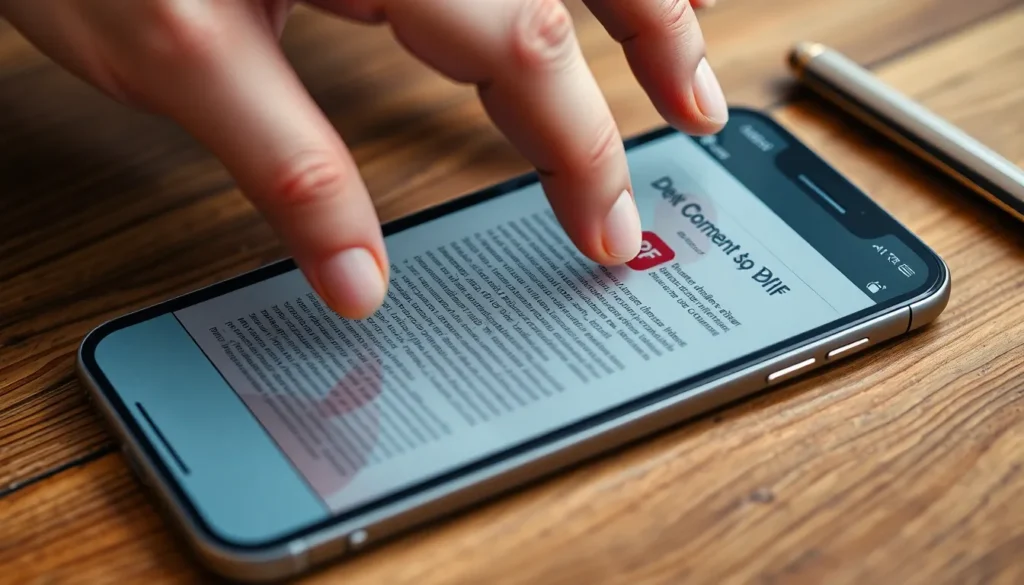
Changing a file to PDF on an iPhone can be done easily using various built-in apps and third-party applications. Here are some common methods.
Using The Files App
The Files app lets users convert files to PDF quickly. Start by locating the desired document in the Files app. Tap the file to open it, then select the share icon. From the share sheet, choose “Print.” In the Printer Options, perform a pinch-out gesture on the preview to reveal the PDF options. Finally, tap the share icon again to save the document as a PDF or send it via email.
Using The Notes App
The Notes app offers a straightforward way to convert files to PDF. Open a note containing text or images that needs conversion. Tap the share icon in the upper right corner. Select “Create PDF” from the share options. After that, users can review the PDF, then tap the share icon again to export or save the file to their desired location.
Using Third-Party Apps
Numerous third-party apps provide robust file conversion features. Apps like Adobe Acrobat Reader or PDF Expert allow users to convert various formats to PDF easily. After installing a preferred app, open the file within the app. Users will typically find a conversion option in the menu. Upon completion, they can save or share the PDF as needed, often with additional functionalities like editing and annotation.
Tips For Managing PDF Files On iPhone
Organizing PDF files on an iPhone enhances accessibility and efficiency. First, use the Files app to create folders for specific categories, like work or personal documents. Naming conventions help in identifying files quickly, so include descriptive titles and dates.
Utilize the search function in the Files app. This feature allows users to find PDFs by name or content keyword, streamlining the process of locating important documents. Regularly deleting outdated PDFs keeps the storage uncluttered, conserving space on the device.
Backup important PDF files using iCloud or other cloud storage solutions. This strategy prevents data loss and ensures files are accessible from multiple devices. Additionally, consider using PDF readers like Adobe Acrobat Reader for advanced functionalities, including text search and annotation.
Combining annotations with notes offers an effective way to highlight essential information. Highlighting key points or adding comments makes reviewing documents easier. Utilizing password protection adds a layer of security for sensitive PDFs, ensuring only authorized users can access them.
Sharing PDF files is straightforward. Use the share icon in the Files or Notes app for easy distribution. Compatibility with various email and messaging platforms simplifies collaboration, making it efficient to send important documents to colleagues or friends.
Exploring third-party applications can expand PDF management capabilities. Look for apps that offer features like merging multiple PDFs or converting images to PDF format. These tools provide flexibility and additional options for users looking to optimize their file management process on an iPhone.
Mastering the art of converting files to PDF on an iPhone is essential for effective document management. With the versatility and reliability of PDF files, users can ensure their documents maintain formatting and security while being easily shareable across devices.
By utilizing built-in apps like Files and Notes or exploring third-party applications, converting files has never been easier. Additionally, organizing and managing PDFs can significantly enhance productivity and accessibility.
Embracing these methods not only simplifies workflows but also empowers users to handle their documents with confidence and efficiency.


